
Working as a Hotel Chef for The Chef Tree
For those considering a career as a Hotel Chef, there are a number of motivators. A Hotel Chef can be a challenging profession, but there are numerous benefits to this career. So why become a Hotel Chef? Here are 10 reasons why being a hotel chef might be a great move for you.
Working as a Hotel Chef makes a difference Unlike other professions where you may work behind the scenes, there is nothing quite like seeing the smile of understanding on a guest’s face as your food “appears” for them.
Hotel Chefs can work all over the world Working as a Chef is a highly transferable skill. If you train to become a Hotel Chef, you will be able to work pretty much anywhere in the world.
Working as a Chef is a highly social job You will work as part of a team with your colleagues, while interacting with Guests each day. Hotel Chefs have the opportunity to become an integral part of the Hospitality community.
At the same time, you can have independence As a Hotel Chef you are responsible for your own Kitchen or food. You will be able to make decisions regarding what is best for your shift and you have the opportunity to inject your own personality into your job.
You will get to learn as you work Hotel Chefs not only get to share their existing knowledge, but they get to research into topics and learn something new continuously.
Hotel Chefs can have job security While other jobs can be replaced by technology, there will always be a need for Hotel Chefs. Many areas, particularly in urban centres, have high demand for experienced Hotel Chefs.
You can benefit from flexible hours For Hotel Chefs, many reasons for wanting to work involve the convenient scheduling. If you have children, you can arrange a similar schedule.
Holidays While they may not be the number one reason to become a Hotel Chef, holidays in big companies are another great benefit. The paid time off outside of your Hotel work can be a bonus for Hotel Chefs.
No two days are the same Being a Hotel Chef is a job with built-in variety, as you work through new kitchens and menus, teach new chefs, and work with new teams each year.
As a Hotel Chef you will have more than just a job At the end of the day, being a Hotel Chef offers far more than just money. You will have a satisfying career, through interacting with Hotel workers and other community members, you will gain a greater understanding of your own Hotel Society and gain your own creative skills.
Chef Jobs



What skills do you need to work in a hotel kitchen?
Successful chefs need business and communication skills, as well as the ability to develop recipes, plan menus, and ensure the meals they serve are of the best quality.
These skills include the following:
Budgeting for expenses and managing employees.
Communicating instructions clearly and effectively to staff.
Motivating kitchen staff and developing constructive and cooperative working relationships.
Developing and preparing creative, interesting, and innovative recipes.
Having a keen sense of taste and smell to create meals that customers will enjoy.
Agility to handle knives and other cooking implements properly for cutting, chopping, and dicing.
The ability to work long shifts overseeing the preparation and serving of meals.
Time management skills to ensure efficiency in meal preparation and service.
Attention to Detail
Cooking is a science. Every ingredient and measurement must be exact, including ordering food products or figuring out how long to cook certain items so that they’re all plated at the same time. A chef needs to have an eye for details such as:
Heat Control
Measuring
Portion Sizing
Precision
Presentation
Quality of Food
Supervising
Cleanliness
Chefs need to know how to keep their kitchens sanitary. This is very important in a restaurant, where unsanitary conditions can affect the quality of the food, and can even force a restaurant to shut down. Chefs are responsible for following the local health code and dealing with:
Health and Safety
Hygiene
Sanitary Practices
Creativity
Working in the food industry requires creativity. Chefs must be open to incorporating new food items into menus as well as improving older recipes. Creativity and imagination will keep customers coming back for more. Chefs experiment in the following ways:
Collaboration
Experimenting
Menu Design
Presentation
Recipe Design
Trial and Error
Culinary Expertise
The most important hard skill chefs need is an ability to cook, as well as knowledge of the kitchen. This broad skill includes a variety of smaller skills, including knife and tasting skills. Chefs need to be able to cook precisely and efficiently. They also need to be skilled at recognizing flavours and judging the balance of seasonings. Chefs often have experience with:
Baking
Baking Techniques
Consistency
Cooking
Culinary Expertise
Food Preparation
Grilling
Ingredient Selection
Knife Control
Knife Cuts
Knife Skills
Pastry
Presentation
Fast-Paced Decision Making
A chef should be able to make decisions quickly and efficiently. The kitchen is a fast-paced environment, and a chef has to make numerous decisions at once. They should be able to:
Handle Pressure
Problem Solving
Take Initiative
Motivational Management Style
A good chef will motivate those working in the kitchen. He or she should be able to keep everyone working at a fast, efficient pace by demonstrating the following traits:
Communication
Cooking Techniques
Leadership
Passion
Organisation
Chefs must be very organized in the kitchen. Often, they have to work on a variety of tasks at once and must do so while keeping the kitchen clean and safe. They must create order and structure in the kitchen. They do this in the following ways:
Commitment to Quality
Being Efficient
Kitchen Safety
Kitchen Tools
Multitasking
Planning
Safe Food Handling
Sanitary Practices
Team Player
A chef is part of a team and must be able to work well with others. Not only must he or she work with the other cooks in the kitchen, but he or she must also be able to work effectively with staff and management. Chefs should be able to:
Accept Feedback
Collaborate
Show Compassion
Emotional Intelligence
Give Feedback
Be Interpersonal
Have a Sense of Humour
Team Building
Training
What experience do you need to work in a hotel kitchen?
Skill levels will vary from hotel to hotel, depending on the menu choices on offer but as with any commercial eatery you will need to have a good knowledge around;
Kitchen skills
A chef needs to run a smooth-operating kitchen. Doing so requires the implementation and maintenance of sanitary practices to ensure that a kitchen remains hygienic and that the food patrons receive are safe to consume. In addition, chefs are responsible for maintaining the necessary health and safety standards and should know how to apply first aid in the case of burns, cuts or other accidents in the kitchen.
Kitchen staff work with a wide range of equipment and tools, such as meat slicers, mixers, food processors and deep fryers. A chef needs to know how to operate everything in a kitchen so that they can ensure that kitchen staff use all equipment and tools correctly and safely. It’s also their responsibility to ensure that all equipment is properly maintained.
Food preparation skills
Whether a chef acquires this knowledge by attending a culinary school or through on-the-job training and experience, they need superior cooking and culinary skills. These include knowledge of various cooking techniques applied in classic and modern cuisine, a refined palate to carefully balance flavours and seasoning and a knowledge of what works for your venue.
Knowledge of nutrition
Working as a chef requires a solid understanding and an awareness of nutrition. Besides focusing on creating tasty and attractive dishes, a chef needs to consider the nutritional value of the food they present to customers. Factors to keep in mind when planning menu dishes, for instance, is the body’s ability to process various foods and whether certain products can cause an allergic reaction.
Business skills
It’s a chef’s responsibility to guarantee the profitability of a kitchen. This means that they need basic accounting skills, including the ability to plan and create budgets and control labour and food costs. An important aspect of staying within a budget is purchasing quality products at the right cost, which involves choosing the correct suppliers.
A chef must ensure unnecessary food wastage in a kitchen and must enforce strict inventory controls in order to keep on top of your budget.
Passion and motivation
Working as a chef can be an exciting and rewarding career. However, the occupation comes with its fair share of challenges, which include long hours, working in fast-paced and high-pressure environments, dealing with difficult customers and delivering delicious and exciting food while also ensuring that a kitchen is profitable. To maintain a strong work performance over the years and stay motivated and enthusiastic about their job, a chef needs a strong passion for the culinary world and the hospitality industry. A chef must also feel passionate about delivering excellent customer service.
You get to go to different venues, you’re not stuck in the same job endlessly, not boring. You don’t have to go back when you don’t like somewhere and there is a variety of jobs.
Working for The Chef Tree is completely different from being a full-time chef. You choose the hours you want to do, fill in your portal, and everything is arranged around that.
What does The Chef Tree Pay for a Hotel Chef?
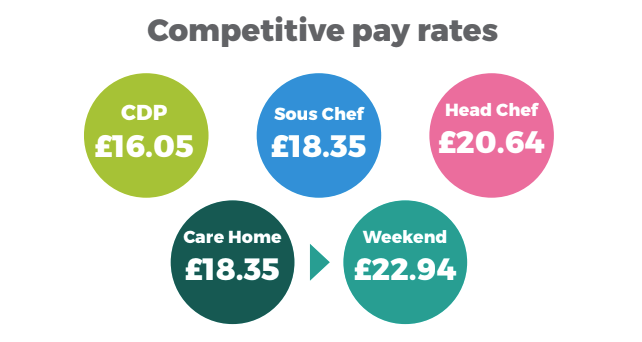
Our rates are dependent on your experience but a Chef De Partie can expect to earn £14 p.h, a sous chef, £16 p.h, a Head chef, £18 p.h and an Executive chef or weekend care home chef, £20 p.h.
What are the benefits of working for TCT?
When you join The Chef Tree you will be entitled to the following amazing benefits;
Competitive rates of pay. Our current rate for a cook is £16ph.
Our Monthly Bonus Scheme - Complete 166 hours per month (just under 38.5 hours per week) and you will receive £100 bonus. This will be paid monthly.
Our Refer a Chef scheme – If you refer a chef to us you will receive £150 when the chef completes 5 shifts. The chef you refer will receive £75 on completion of 5 shifts.
Access to our online benefit partners, Pirkx - a benefit scheme for courses, health, wellbeing, shopping and more! For more information visit www.pirkx.com
Where can you work as a Hotel Chef?
What our Chefs say!
I like working for The Chef Tree because of the freedom and the flexibility
You get to go to different venues, you’re not stuck in the same job endlessly, not boring. You don’t have to go back when you don’t like somewhere and there is a variety of jobs.
Working for The Chef Tree is completely different from being a full-time chef
You choose the hours you want to do, fill in your portal, and everything is
arranged around that
Dont just take our word for it
Dont just take our word for it, This is what our chefs say about working for the chef tree
Call us: 071 8604 611