
Working as a chef in a nursery kitchen
Working as a Chef in a Nursery Kitchen
Healthy eating and nutrition for young children is a hot topic. Reports show that child obesity levels in Britain continue to rise and over 20% of 4-5 year olds are overweight or obese. Children adopt lifelong eating habits in their early years, so their earliest experiences of food are absolutely critical for them to lead healthy lives as adults – this can be massively impacted by nursery meals alone. Over the last 20 years there’s been a huge increase in the number of children using early years settings. Many thousands of Britain’s children eat all three of their daily meals at nurseries or childminder’s own homes, so these settings play a critical role to ensure healthy eating and nutrition through nutritionally balanced meals. Parents need to know that their children are getting high quality, nutritious food while they are at nursery or with a childminder. If good eating habits are instilled in these settings by teaching young children about food, there’s a much better chance that the children will go on to eat a balanced, healthy diet as adults.
What skills do you need to work in a nursery kitchen?
You will need to be/have:
- Catering qualification & Food Hygiene Certificate
- Experience of a catering environment
- Experience of planning balanced, nutritional menus
- A strong team player
- Flexible and able to work without direct supervision
Your role is also likely to include:
- To provide nutritious meals for babies and children each day
- To complete lunchtime service and prep teatime with an efficient and clear hand over
- To have a desire to work within a nursery environment fully overseeing all aspects of the nursery kitchen in conjunction with the Nursery Manager
- To be responsible for the completion of all necessary paperwork
- To adhere to company policies on Health and Safety, dietary requirements etc just as in any professional kitchen.
Chef Jobs




How does a professional nursery kitchen run?
Your day will begin by preparing breakfast for those children who arrive early. This is likely to include food such as cereal, toast, fruit or scrambled eggs. After breakfast you will need to tidy up and start preparing the morning snacks and lunch.
When planning your menu’s you will have to take into account any child’s dietary requirements. You may have children who don’t eat dairy, or are soya intolerant or needs halal. These requirements should be made clear to you prior to the start of the day and it is vital that you ensure these dietary requirements are always taken into consideration.
You may also be required to make birthday cakes to celebrate birthdays of the children at the nursery. You may even be called upon to demonstrate some basic culinary skills to older children who have shown an interest.
Depending on the nursery who employs you, you may be asked to provide food for staff and parents throughout the day. It is unlikely that you would be asked to provide different menu items as the food you make for the children should be healthy, tasty and nutritious and so perfect for adults!
In addition to the cooking it is likely that you will need to take care of all nursery kitchen related paperwork, such as accounts as well as maintaining the kitchen, ensuring machinery is clean and safe. Nursery providers can be visited by council inspectors at any time. If any issues are found and the kitchen is deemed unsafe, the nursery would have to close immediately.
What are the shift types in a nursery kitchen?
It is likely that as chef in the kitchen you will oversee all meals and snacks. As most early years settings tend to fit around helping parents to come back into the workforce, you may start before 8am and finish by 5pm. This would be dependent on the hours the setting provides.
The good news is that the majority of nurseries do not open on weekends and so your weekends are free.
What type of food do you cook in a nursery kitchen?
The early years are so important in establishing healthy eating habits as they can set the foundations for their future health & wellbeing. In addition, the time that children spend in a childcare setting is hugely influential & of great importance for receiving good nutrition & laying the foundations of healthy habits for later years.
When it comes to the main food groups, this is what the guidelines specify:
Carbohydrates (e.g. bread, rice, pasta, potato, couscous)
A portion should be offered at lunch each day with at least 3 different types over a week to increase variety. A mixture of white & wholegrain carbohydrates should be offered & it’s good practice to include a serving of wholegrain once per week at lunch, e.g. brown rice or whole-wheat pasta.
Starchy, fried food & pastry should be offered no more than once per week, due to the high fat content.
Fruit & Vegetables
At least 1 portion of fruit or vegetables should be offered at each lunch & should be varied across the week.
Protein foods
At least 1 portion of protein-based food should be offered at lunch each day, e.g. beans, eggs, pulses, fish, meat (e.g. red meat or poultry) or meat alternatives. This should be varied each day & across the week.
1 lunch each week should be provided for all children which uses pulses (beans, chickpeas or lentils) or meat alternatives as the main protein source.
Oily fish (e.g. mackerel or salmon) should be provided at least once every 3 weeks for lunch or tea. Perhaps in the form of fish pie or salmon pasta.
Dairy foods
It is best practice to provide 3 portions of milk & dairy foods each day (including those provided at home). This could include milk, cheese or yoghurt. One of these can be provided as part of snacks.
Choose yoghurt & fromage frais with a lower sugar content, so those which are labelled as ‘low’ (green) or ‘medium’ (amber) in sugar.
Fresh tap water & fresh milk should be the only provided drink options. Children should have access to drinking water throughout the day.
Avoid fruit juice (neat & diluted), fruit juice drinks, squash, fizzy drinks & flavoured water.
N.B. – Nursery menus should ideally be on a minimum 3-week cycle, so there is plenty of variety.
What experience do you need to work in a nursery kitchen?
Experience of working in a busy kitchen environment is expected, along with the ability to cook good healthy meals from scratch.
You should hold, as a minimum, a basic food hygiene certificate which of course should be up to date. As you would be working with vulnerable residents, expect a company to ask for a full DBS disclosure.
You get to go to different venues, you’re not stuck in the same job endlessly, not boring. You don’t have to go back when you don’t like somewhere and there is a variety of jobs.
Working for The Chef Tree is completely different from being a full-time chef. You choose the hours you want to do, fill in your portal, and everything is arranged around that.
How much does a Nursery chef get paid?
According to reed.co.uk, the average nursery chef earns £23, 341 pa
What are the benefits of working for TCT?
When you join The Chef Tree you will be entitled to the following amazing benefits;
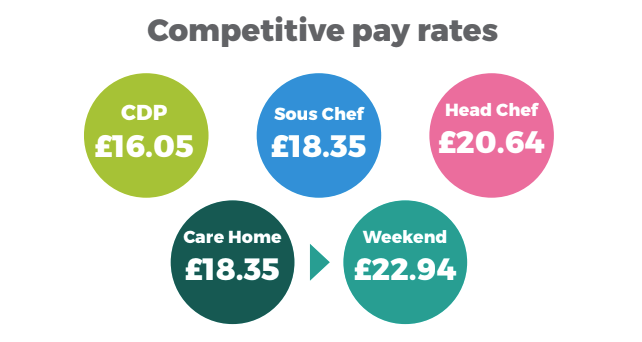
Competitive rates of pay. Our current rate for a cook is £16ph.
Our Monthly Bonus Scheme - Complete 166 hours per month (just under 38.5 hours per week) and you will receive £100 bonus. This will be paid monthly.
Our Refer a Chef scheme – If you refer a chef to us you will receive £150 when the chef completes 5 shifts. The chef you refer will receive £75 on completion of 5 shifts.
Access to our online benefit partners, Pirkx - a benefit scheme for courses, health, wellbeing, shopping and more! For more information visit www.pirkx.com
Where can you work as a Nursery Home Chef?
What our Chefs say!
I like working for The Chef Tree because of the freedom and the flexibility
You get to go to different venues, you’re not stuck in the same job endlessly, not boring. You don’t have to go back when you don’t like somewhere and there is a variety of jobs.
Working for The Chef Tree is completely different from being a full-time chef
You choose the hours you want to do, fill in your portal, and everything is
arranged around that
Dont just take our word for it
Dont just take our word for it, This is what our chefs say about working for the chef tree
Registration is quick and easy!
If you're looking for a new chef job and want to start right now then we can help!
Complete the form and we'll call you right back.
Step 1 of 1
Call us: 071 8604 611